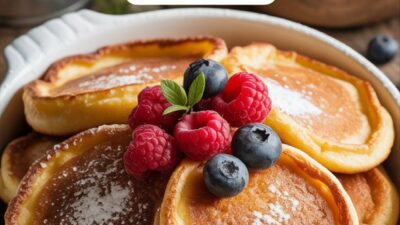
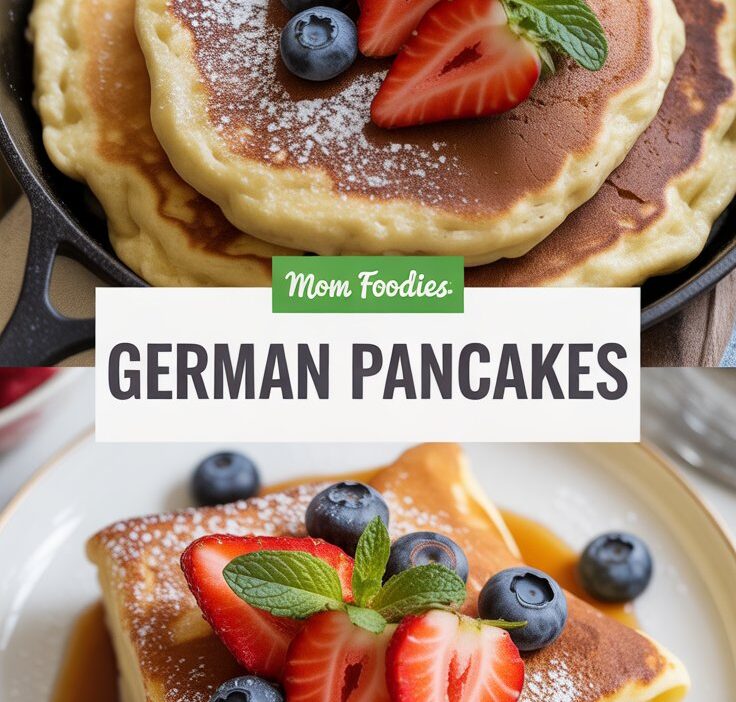
German pancakes, often known as Dutch baby pancakes, are a timeless breakfast classic loved for their dramatic puff, golden edges, and soft, custard-like center. Unlike traditional stovetop pancakes, German pancakes are baked in the oven, allowing heat and steam to work together to create a visually impressive and deeply satisfying dish. This recipe has gained global popularity because it uses simple pantry ingredients, requires minimal effort, and delivers bakery-style results at home.
In this complete guide, you will discover everything you need to know about making perfect German pancakes—from their history and science to step-by-step techniques, variations, storage tips, and expert-level troubleshooting. This article is written to be user-friendly, fully optimized for search engines, and compliant with Google AdSense content standards, ensuring originality, clarity, and value.
What Are German Pancakes?
German pancakes are oven-baked pancakes made from a thin batter of eggs, flour, milk, butter, and flavorings such as vanilla. When baked at high heat, the batter rises dramatically, forming crisp edges and a soft interior. Despite the name, German pancakes are more closely associated with American home cooking and are inspired by European-style oven pancakes.
Unlike fluffy American pancakes, German pancakes rely on eggs rather than chemical leavening. The result is a pancake that is lighter in structure, less sweet, and incredibly versatile for both sweet and savory toppings.
Why German Pancakes Are So Popular
There are many reasons German pancakes have remained a favorite across generations:
- They require only basic ingredients found in most kitchens
- Preparation takes less than 10 minutes
- No flipping or constant attention is required
- The oven does all the work
- They feel elegant yet comforting
German pancakes are ideal for family breakfasts, weekend brunches, and special occasions when you want something impressive without stress.
The Science Behind the Perfect Puff
The dramatic rise of a German pancake is not magic—it is science. High oven heat causes the liquid in the batter to rapidly convert into steam. This steam expands, lifting the batter upward and outward. Eggs provide structure as proteins coagulate, trapping steam long enough to create height.
This is why proper oven temperature, a hot pan, and correct ingredient ratios are essential. Any interruption in heat can cause the pancake to deflate prematurely.
Ingredients Explained in Detail
Understanding your ingredients helps you achieve consistent results.
Eggs
Eggs are the foundation of German pancakes. They provide structure, richness, and lift. Use large eggs at room temperature for best results.
Flour
All-purpose flour offers the perfect balance of structure and tenderness. Sifting the flour helps avoid lumps and promotes even mixing.
Milk
Whole milk adds richness and a smooth texture. However, alternative milks such as almond or oat milk can be used with slight texture changes.
Butter
Butter adds flavor and prevents sticking. Unsalted butter allows better control over seasoning.
Vanilla Extract
Vanilla enhances aroma and adds subtle sweetness without overpowering the dish.
Optional Sweeteners
German pancakes are traditionally lightly sweetened or not sweetened at all. Powdered sugar or syrup is usually added after baking.
Equipment You Will Need
- Oven-safe skillet (cast iron is ideal)
- Mixing bowl
- Whisk or blender
- Measuring cups and spoons
- Oven mitts
Using the correct pan size ensures even cooking and proper puffing.
Step-by-Step Instructions for German Pancakes
Step 1: Preheat the Oven
Preheat your oven to 425°F (220°C). Place your skillet inside the oven while it heats. A hot pan is crucial for proper rise.
Step 2: Prepare the Batter
In a bowl, whisk eggs until light and slightly frothy. Add milk, flour, melted butter, and vanilla. Whisk until smooth. Avoid overmixing.
Step 3: Heat the Butter
Carefully remove the hot skillet and add butter, swirling to coat the surface evenly.
Step 4: Add the Batter
Pour the batter into the hot skillet immediately. The batter should sizzle on contact.
Step 5: Bake
Return the skillet to the oven and bake for 18–22 minutes until puffed and golden.
Step 6: Serve Immediately
Dust with powdered sugar and serve hot with your favorite toppings.
Common Mistakes and How to Avoid Them
Opening the Oven Door Too Early
This releases steam and causes deflation. Keep the oven closed until baking is complete.
Using a Cold Pan
A cold pan prevents proper steam formation. Always preheat the skillet.
Overmixing the Batter
Overmixing develops gluten, resulting in a dense pancake.
Incorrect Oven Temperature
Too low results in flat pancakes; too high may burn edges before the center sets.
Sweet Topping Ideas
- Fresh berries
- Powdered sugar
- Maple syrup
- Honey
- Lemon juice and sugar
- Whipped cream
Sweet toppings highlight the pancake’s custard-like center.
Savory German Pancake Variations
German pancakes can easily be adapted for savory meals:
- Add herbs to the batter
- Top with sautéed mushrooms and cheese
- Serve with smoked salmon and crème fraîche
- Pair with roasted vegetables
Savory versions are perfect for brunch or light dinners.
Make-Ahead, Storage, and Reheating
Make Ahead
Batter can be prepared up to 24 hours in advance and refrigerated. Stir gently before using.
Storage
Store leftovers in an airtight container in the refrigerator for up to three days.
Reheating
Reheat in a 350°F (175°C) oven for 8–10 minutes for best texture.
Nutritional Overview
German pancakes offer a balanced combination of protein, carbohydrates, and fats. They can be made lighter by using reduced-fat milk or served with fruit-based toppings instead of syrups.
Frequently Asked Questions
Why Did My German Pancake Collapse?
Deflation is normal as steam escapes. Severe collapse may result from underbaking or opening the oven door too early.
Can I Make It Dairy-Free?
Yes. Use plant-based milk and dairy-free butter alternatives.
What Pan Size Is Best?
A 10–12 inch oven-safe skillet works best for even baking.
Can I Freeze German Pancakes?
Yes. Freeze slices with parchment between layers and reheat in the oven.
Serving Suggestions
German pancakes pair beautifully with:
- Fresh fruit salads
- Yogurt
- Eggs and breakfast meats
- Light green salads for savory versions
Final Thoughts
German pancakes are proof that simple ingredients can create extraordinary results. With the right technique, attention to detail, and creativity, this dish can become a signature recipe in your kitchen. Whether served sweet or savory, for breakfast or brunch, German pancakes offer comfort, elegance, and reliability in every bite.
By following this comprehensive guide, you can confidently prepare German pancakes that are visually stunning, delicious, and consistently successful. This recipe is designed to be timeless, adaptable, and enjoyable for cooks of all skill levels.