Shakespeare was a master of wordplay, using puns not only to entertain but to add depth, humor, and double meaning to his plays.
If in tragic moments or comedic banter, his clever twists on language kept audiences engaged and characters more relatable.
From the star-crossed lovers of Romeo and Juliet to the dark ambition of Macbeth, his puns added texture to dialogue and offered subtle commentary.
In this guide, we’ll explore famous Shakespearean puns, understand their purpose, and even break down what a pun and soliloquy mean in the world of drama.
Let’s dive in!
Shakespeare Puns Romeo and Juliet
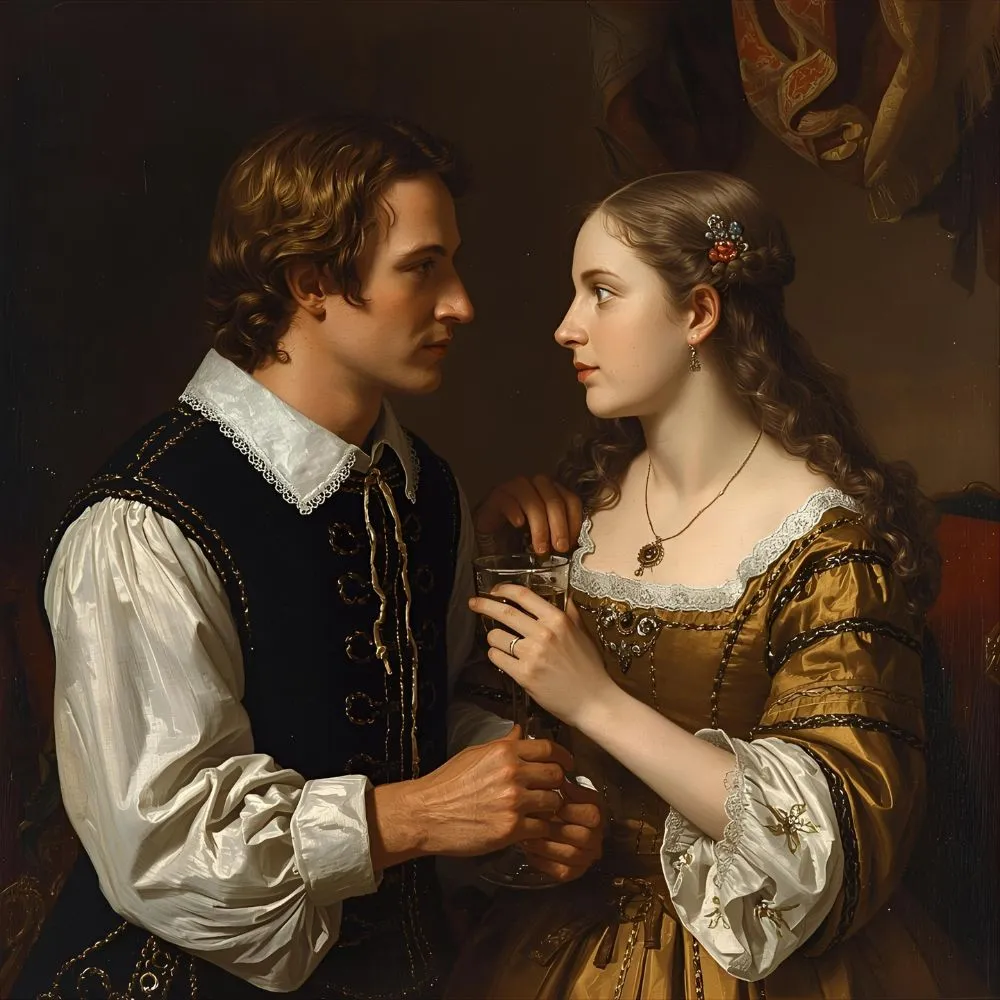
- ❤️ A little more than kin and less than kind
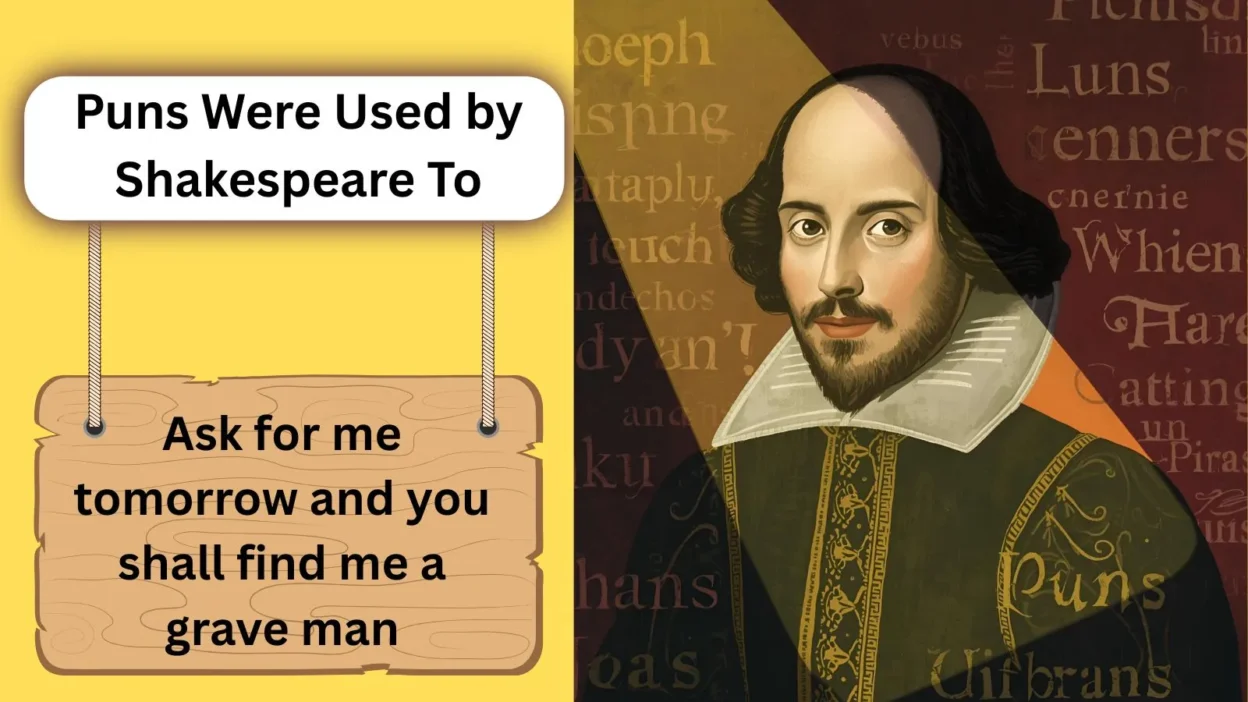
- ❤️ Ask for me tomorrow and you shall find me a grave man
- ❤️ You kiss by the book
- ❤️ My only love sprung from my only hate
- ❤️ Wisely and slow they stumble that run fast
- ❤️ A rose by any other name would smell as sweet
- ❤️ Parting is such sweet sorrow
- ❤️ O teach me how I should forget to think
- ❤️ He jests at scars that never felt a wound
- ❤️ These violent delights have violent ends
- ❤️ O Romeo, Romeo, wherefore art thou Romeo
- ❤️ My bounty is as boundless as the sea
- ❤️ For never was a story of more woe than this of Juliet and her Romeo
- ❤️ Thus with a kiss I die
- ❤️ See how she leans her cheek upon her hand
- ❤️ It is the east and Juliet is the sun
- ❤️ I am fortune’s fool
- ❤️ O, I am slain
Shakespeare Puns Macbeth
- 🗡️ Is this a dagger which I see before me
- 🗡️ Fair is foul and foul is fair
- 🗡️ Out damned spot out I say
- 🗡️ Double double toil and trouble
- 🗡️ What’s done cannot be undone
- 🗡️ Look like the innocent flower but be the serpent under it
- 🗡️ Vaulting ambition which o’erleaps itself
- 🗡️ All the perfumes of Arabia will not sweeten this little hand
- 🗡️ Tomorrow and tomorrow and tomorrow creeps in this petty pace
- 🗡️ By the pricking of my thumbs something wicked this way comes
- 🗡️ When the hurly-burly’s done when the battle’s lost and won
- 🗡️ I dare do all that may become a man
- 🗡️ Stars hide your fires
- 🗡️ Out out brief candle
- 🗡️ Screw your courage to the sticking-place
- 🗡️ Blood will have blood
- 🗡️ The instruments of darkness tell us truths
- 🗡️ I have no spur to prick the sides of my intent
Puns Shakespeare Definition
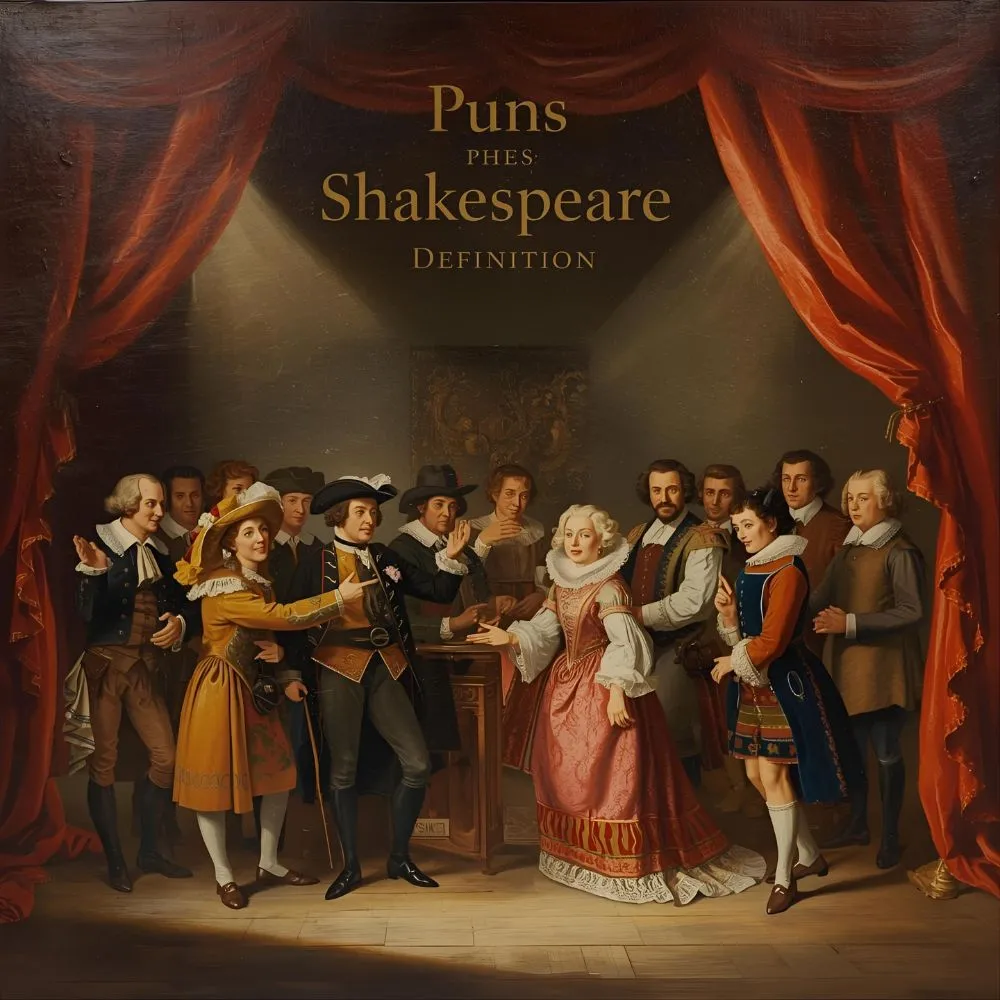
- 📜 A pun is a play on words that exploits multiple meanings for humor or effect
- 📜 Shakespeare used puns to add wit, double meaning, and subtle jokes in dialogue
- 📜 His plays often use puns to reveal character emotions
- 📜 Puns can be humorous or dark depending on the scene
- 📜 Many puns were clever references to contemporary events
- 📜 Puns served to engage audiences of all social classes
- 📜 Shakespeare’s puns made language more memorable
- 📜 He used puns to foreshadow events
- 📜 Puns often highlighted irony
- 📜 Some puns were bawdy for comedic relief
- 📜 Wordplay showcased Shakespeare’s mastery of the English language
- 📜 Puns could serve as a subtle insult
- 📜 They could also emphasize key themes
- 📜 Audiences expected witty wordplay from his plays
- 📜 Puns were common in both comedies and tragedies
- 📜 Shakespeare sometimes used puns to bypass censorship
- 📜 Puns remain a hallmark of his style
- 📜 His use of puns influenced future playwrights
A Soliloquy Is Used in Drama To
- 🎭 Reveal a character’s inner thoughts directly to the audience
- 🎭 Share feelings that cannot be expressed to other characters
- 🎭 Create dramatic tension
- 🎭 Help the audience understand motives
- 🎭 Provide exposition
- 🎭 Show moral conflict
- 🎭 Allow poetic expression of emotions
- 🎭 Give insight into hidden plans
- 🎭 Build empathy for characters
- 🎭 Clarify plot points
- 🎭 Add a lyrical quality to plays
- 🎭 Deepen the psychological portrayal of characters
- 🎭 Transition between scenes smoothly
- 🎭 Express philosophical ideas
- 🎭 Highlight thematic elements
- 🎭 Engage the audience directly
- 🎭 Slow down the pacing for reflection
- 🎭 Mark turning points in the story
Conclusion
Shakespeare’s puns were more than witty one-liners; they were a powerful tool for humor, emotion, and narrative depth.
By weaving them into love stories, tragedies, and philosophical monologues, he transformed simple dialogue into timeless art.
His mastery of wordplay, combined with dramatic techniques like soliloquies, continues to inspire writers and entertain audiences centuries later.
Understanding how and why he used these tools allows us to appreciate the brilliance behind his works even more.